ABOUT · MICHAL GLINKA
I didn't plan to end up in B2B marketing.
I planned to sell spare parts.The first year, the parts didn't sell. The only thing that fixed it was the thing I'd been avoiding.Fifteen years later I manage a seven-figure budget — and still write the first cold email myself. This page is about why.
Let's see if we're a good fit

CHAPTER ONE · 2011–2019
Two jobs, one lesson, eight years.
2011. A small flat in Warsaw. Boxes of spare parts in the hallway.
I had a web shop, a transport degree, and no idea how people would find us.
So I did what every founder does → I waited for Google to notice. 🙃
Google did not notice.
What noticed was my bank account.
So I took a day job.
Marketing manager at a toy company. Crayola campaigns on TV and radio, product training for two hundred shop assistants, a brand I didn't own and couldn't break.
By day I learned what a brand is. By night I learned what a conversion is. For three years, both at once.
The shop stopped being a hobby somewhere around year three.
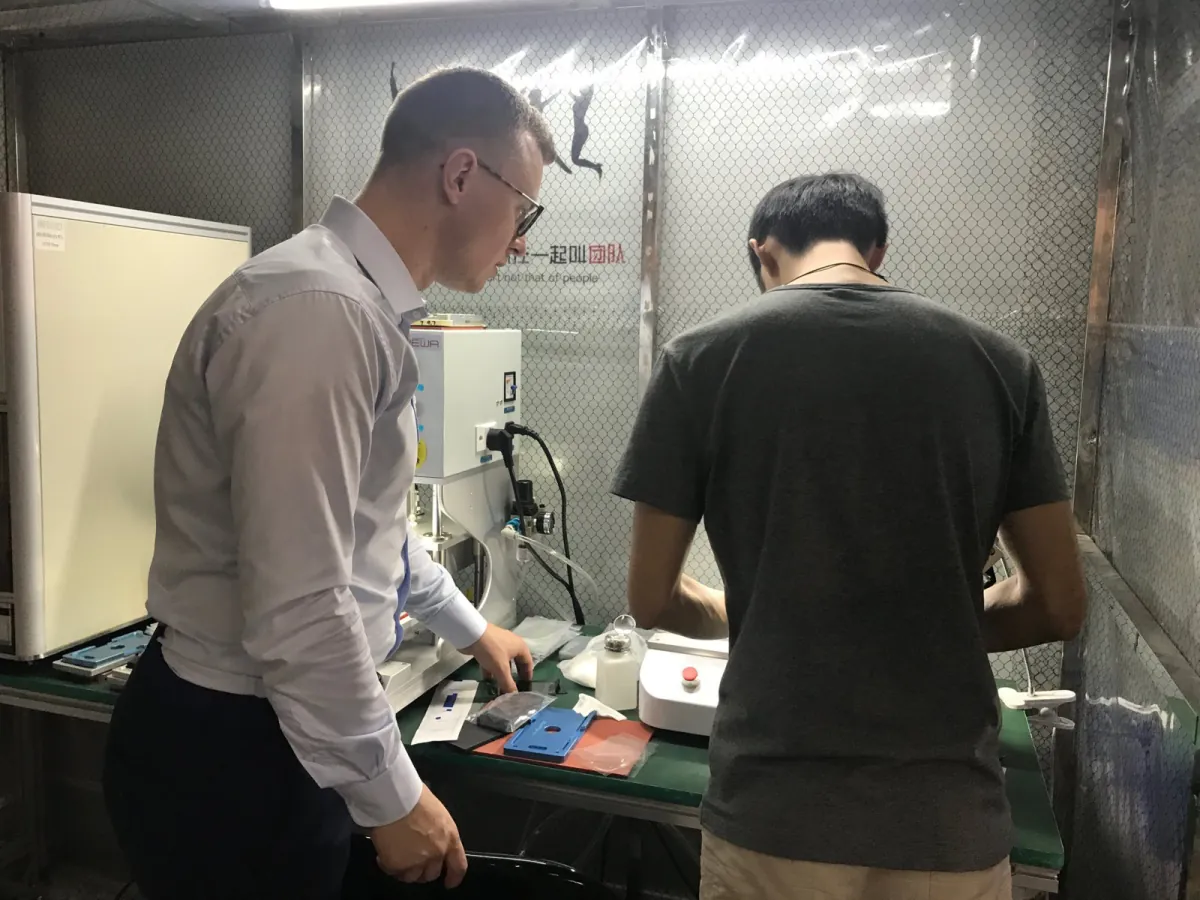
Then a second company grew out of it — a repair service with contracts I'd never have dared to pitch in 2011.
Two warehouses. Twenty-one people. A number on the bank statement that started with a 3 and had six zeros. (•◡•)
And a quiet, slightly embarrassing realisation.
I cared more about why people bought than about what they bought.
CHAPTER TWO · 2019–2022
I sat in the sales chair first.
I sold the shop and did something I had never seen a marketer do.
I took a job in sales.
Head of sales at a dental startup — Poland's first direct-to-patient aligner brand.
Three teams, built from nothing. Two hundred treatments in year one.
And a year of listening to what people say when they don't buy. 🦷
That year rewired me.
When I went back to marketing — a gig platform in Stockholm, a recruiting startup in London, a software house in Wrocław — I kept seeing the same thing.
Marketing made noise at the top.
Sales waited at the bottom.
And between them → a gap nobody owned.
The pipeline leaked somewhere in the middle, and everyone pointed at everyone.
I'd sat in both chairs now.
I couldn't un-see it.
The gap between marketing and sales isn't a strategy problem. It's an ownership problem.WHAT THE SALES CHAIR TAUGHT ME, IN ONE LINE



CHAPTER THREE · 2023–2025
Borrowed, not hired.
2023 was the year I stopped being employed and started being borrowed.
Oslo. Copenhagen. Kraków. Warsaw. Different companies, one brief each time: own the gap between marketing and sales until it closes.
Fractional CMO for a PIM startup moving from freemium to paid.
Demand lead for a rental-software company in Norway, building the whole go-to-market from a blank page.
Consultant for an aviation SaaS in Denmark that needed leads, not slides.
Same gap in every one. Different furniture. 🪑
In Oslo, sales grew 230% in a year.
Then Florida: an IT consultancy where I hit the lead target on about a quarter of the budget — by cutting almost everything and doing three things properly. For a while, two-thirds of their qualified leads came through my own hands.
None of that was clever. It was just someone finally standing in the gap and refusing to leave.
Somewhere in there I stopped thinking of it as "marketing".
It's plumbing. Someone has to own the pipes end to end. (•o•)
CHAPTER FOUR · NOW
From a PLN 1,000 shop to a $2M budget.
In late 2025 I joined Atlassian.
GTM data and strategy. Austin, Texas, on the org chart. Warsaw, on the map.
After fifteen years of being the whole marketing department, I'm now one person inside a very large one.
The budget I manage has more zeros than that first bank statement.
The question is exactly the same → why do people buy, and where does the pipeline leak before they do?
I still answer it the way I learned to in the flat with the boxes.
Open the CRM. Read the replies. Look at the dashboard nobody wants to look at.
Strategy is the easy part. Keeping it alive on a Tuesday is the job.
Operator, not advisor. It's not a tagline. It's just what I was never able to stop doing.
If you want the longer argument, I wrote it down.
••↗
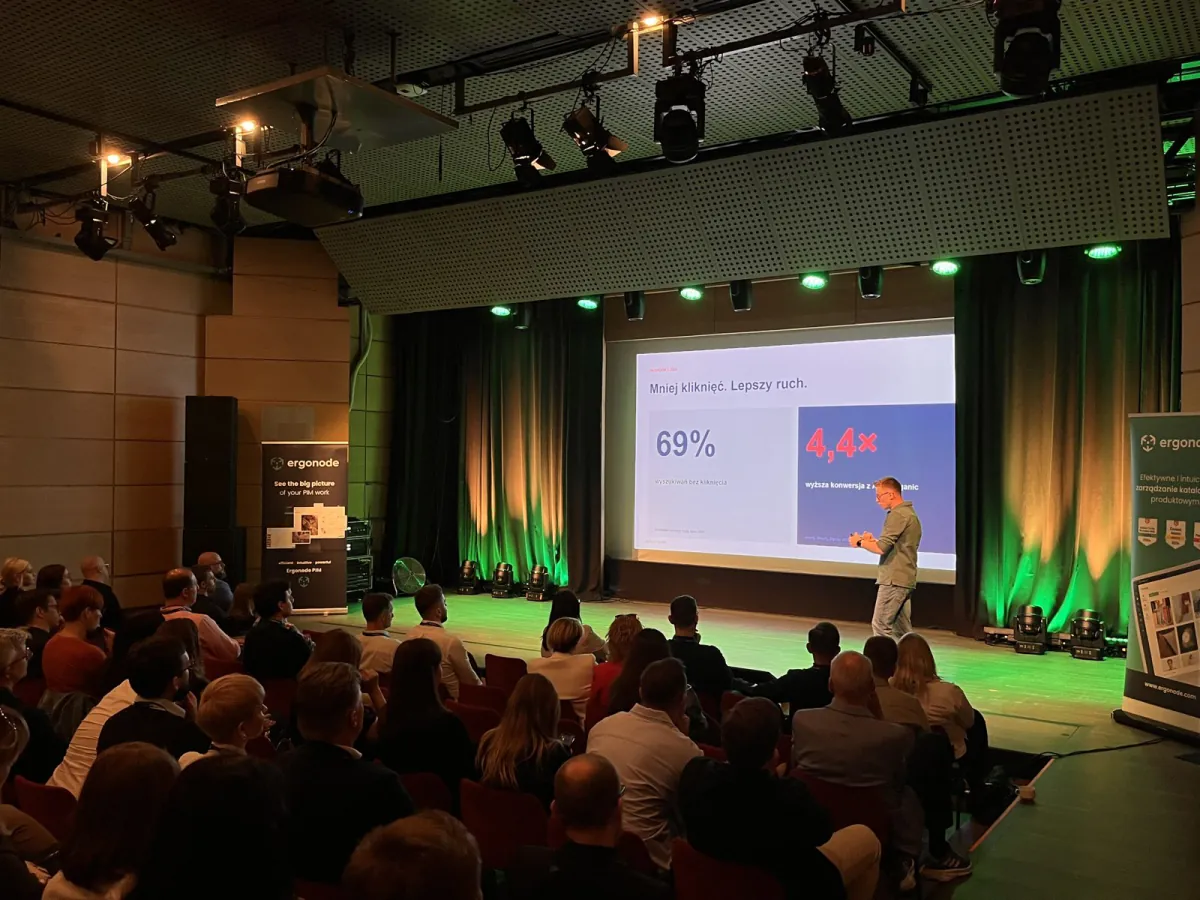 GRID #26 · ON STAGE
THE SHORT VERSION
Four chapters, one thread.
IF YOU'D RATHER LISTEN
Three conversations where I explain it out loud.
 Michał Glinka
OFF THE CLOCK
Things that don't fit on a CV.
I have a postgraduate degree in agricultural economics.
Nobody asked me to get it. I was curious how farms decide what to plant. 🌾
Turns out it's the same question as every marketing budget: limited land, uncertain weather, and you have to commit before you know.
Curiosity is the cheapest competitive advantage I've found. It's also the only one that doesn't get boring.
I speak Polish at home, English at work, and enough Russian to get lost politely.
I've worked with teams in Oslo, Copenhagen, Kraków, Stockholm, London, Miami and Austin — and left Warsaw for almost none of it.
Time zones are a scheduling problem. Not a quality problem. (•◡•)
OTHER PEOPLE'S WORDS
What it's like to work with me.
Michał is truly a one-man-army who can set up a well-performing B2B marketing strategy from scratch and execute it in a timely manner. He understands both sides of the business — sales and marketing.
 Piotr ManikowskiHead of Partnerships · AppJobs
He was the connection between our sales team and marketing — so it was very important that he understood the sales cycle and what sales is aiming for. He likes to organise his work and plan for the future, which helps the team understand how marketing will contribute to sales goals.
 Kasia KaminskaHead of Sales · Tooploox
He has taken ownership of a few important projects in the company and delivered them flawlessly. His observations are spot on and he can nail the essence of the matter. I fully trust his judgments and choices.
 Szymon StomaHead of AI · Tooploox
THINGS PEOPLE ASK
Before you book a call.
Do you actually run the campaigns, or just plan them?+
I run them. The CRM, the ad accounts, the outbound sequences, the dashboards — my hands are on all of it. Strategy is the easy part. Keeping it alive on a Tuesday is the job.You work at Atlassian — do you still take on other companies?+
A few. Smaller B2B SaaS and IT consulting teams, usually 50 to 2,000 people, where one person who does the work beats five who discuss it. If there's a conflict, I'll say so on the first call.Where are you based and where do you work?+
Warsaw. I've worked with teams in Oslo, Copenhagen, Kraków, Stockholm, London, Miami and Austin without moving. Time zones are a scheduling problem, not a quality problem.What happens on a discovery call?+
Thirty minutes. You tell me what you're trying to grow and where it keeps stalling. I tell you whether I can help — and if I can't, who might.
THAT'S THE STORY
Let's see if we're a good fit.
Thirty minutes. No deck, no pitch. Tell me what you're trying to grow and where it keeps stalling. I'll tell you straight whether I can help.
Let's see if we're a good fit Free · Warsaw time · usually a slot this week ••↗